
Central bank gold purchases and global bar and coin buying moved in different directions between July and September 2026. The World Gold Council’s Q3 2026 Gold Demand Trends report, published on 3 November, puts estimated official-sector buying at 321 tonnes, up 42% year on year. By contrast, purchases of physical bars and coins totalled 268 tonnes, down 19%.
That contrast does not mean all private investors abandoned gold. Gold exchange-traded funds (ETFs) also attracted substantial inflows. To understand the quarter, it helps to separate buyers with different objectives, products and time horizons.
What the Q3 2026 Gold Demand Figures Show
The World Gold Council reported the following global sector figures. Central bank demand is an estimated net figure for central banks and other official institutions. Bar and coin demand measures net physical investment buying, while ETF figures represent changes in holdings of physically backed funds.
| Sector | Q3 2026 | Year on year |
|---|---|---|
| Central banks and official institutions | 321.2t | +42% |
| Physical bars and coins | 267.8t | -19% |
| Gold ETFs | 211.2t | -6% |
Source: World Gold Council, Central Banks and Investment, 3 November 2026. Figures are global, cover July to September and may be revised. ETF inflows were positive despite being 6% below Q3 2025.
Why Central Bank Gold Purchases Accelerated
Central banks manage national reserves rather than personal investment portfolios. Gold can diversify reserve assets and reduce reliance on any one currency or issuer, although its price still fluctuates. The World Gold Council points primarily to strategic diversification and risk management rather than an attempt to predict the next price movement.
Q3’s estimated 321t of net official-sector buying exceeded the five-year quarterly average of 227t. Publicly reported net purchases accounted for just 120t; the remaining estimated activity reflects delayed or undisclosed reporting. Among disclosed buyers, China added approximately 63t and Poland 40t. It would therefore be misleading to present reported country totals as the complete global picture.
Why Global Bar and Coin Demand Weakened
Global physical bar and coin demand fell to a four-year quarterly low, from about 329t in Q3 2025 to 268t in Q3 2026. The World Gold Council cites gold trading largely within a range, expectations that US interest rates would stay higher for longer, and strong equity markets as factors that discouraged fresh retail buying.
The backdrop was hardly cheap gold: the quarterly average LBMA gold price was US$4,262 per troy ounce, 23% above Q3 2025. Buying decisions also varied markedly by market. India’s bar and coin demand fell 40% year on year to 55t, while mainland China’s grew 7% to around 79t. A global figure should not be interpreted as a UK-specific household sales number.
A Slower Quarter Does Not Tell the Whole 2026 Story
One quarter can give a misleading impression of a longer trend. Although Q3 was subdued for physical retail buying, the first nine months of 2026 recorded 1,053t of global bar and coin investment, the strongest January to September total since 2013. Central banks bought an estimated 675t over the same nine-month period, 6% above a year earlier.
Those totals describe past demand, not future performance. They show why it is better to distinguish a temporary pause in one buying channel from a wholesale change in the case for owning gold.
Gold ETF Inflows Show a Different Investor Response
Physically backed gold ETFs recorded 211t of net inflows during Q3, taking combined holdings to a record 4,256t. European-listed funds accounted for 92t of the increase; funds listed in the UK attracted about 53t.
These are fund flows, not purchases of gold bars and coins by UK households. ETF investors can include institutions and individuals, and a holding in a gold-backed fund is not the same legal arrangement as personally owning a specific bar or coin. ETF inflows demonstrate that investment interest remained active even as the retail physical segment slowed.
What Does This Mean for UK Physical Gold Investors?
Central bank decisions deserve attention, but they are not a trading instruction for private investors. Reserve managers operate with different obligations, holdings and time horizons. An individual should instead consider why they want gold, how much price volatility they can tolerate and whether they might need the money at short notice.
For those evaluating physical gold investment options for a UK portfolio, the practical questions include purchase premiums, potential resale spreads, storage and insurance costs, and access to cash. Because global gold prices are commonly quoted in US dollars, sterling exchange-rate movements can also affect UK returns. No level of central bank buying guarantees a rise in the gold price.
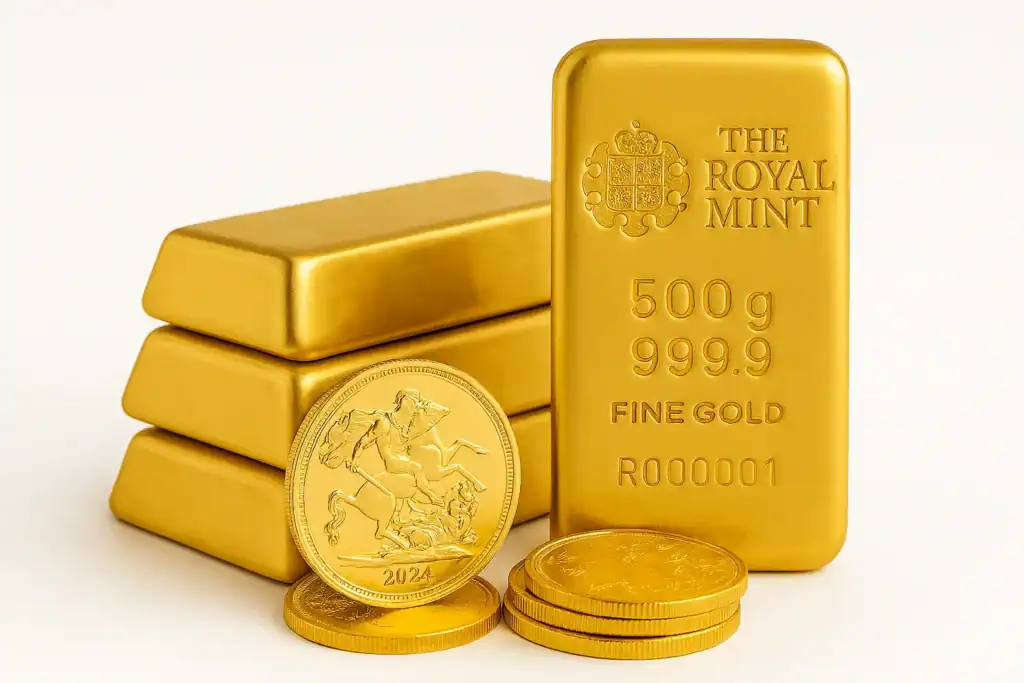
Some buyers prefer physical gold bars in recognised investment weights, while others value the denominations available through investment gold coins for more flexible purchases. Qualifying investment gold is generally exempt from VAT under HMRC’s investment gold rules, but not every gold product has the same tax treatment.
The appropriate form of ownership is also personal. Some people prefer direct possession, while others consider professionally managed custody. Both approaches require a clear understanding of insurance, access, documentation and the parties responsible for safeguarding the metal.
Buying Physical Gold: Questions Worth Asking
Whether purchasing now or later, compare a dealer’s total quoted price with the underlying gold value and understand how a future sale would be priced. Check the products’ weight and purity, documentation, delivery arrangements and any costs of secure storage for privately owned gold bullion.
Physical gold offers tangible ownership for some buyers, but it does not produce income and can fall in price. The quarterly demand figures provide useful context, not personalised financial advice or a reason to buy before assessing affordability, liquidity needs and other investments.
Discuss Physical Gold With Gold Bullion Partners
Q3 2026 shows that central banks and retail bullion buyers can respond differently to the same market. If you are considering bars or coins for long-term ownership, Gold Bullion Partners can discuss the products and practical purchase or storage arrangements available. Seek independent financial or tax advice where appropriate.